
 Fast Next Working Day Delivery
 Bulk Discounts Available
 Order Pre 2pm for Delivery
 YBS SuperQuilt
YBS SuperQuilt
- Description
- How-To Video
- How-To Guides
- Reviews
- Specification
- question_answer Q&As
- picture_as_pdf Data Sheets
Superior Multifoil Insulation
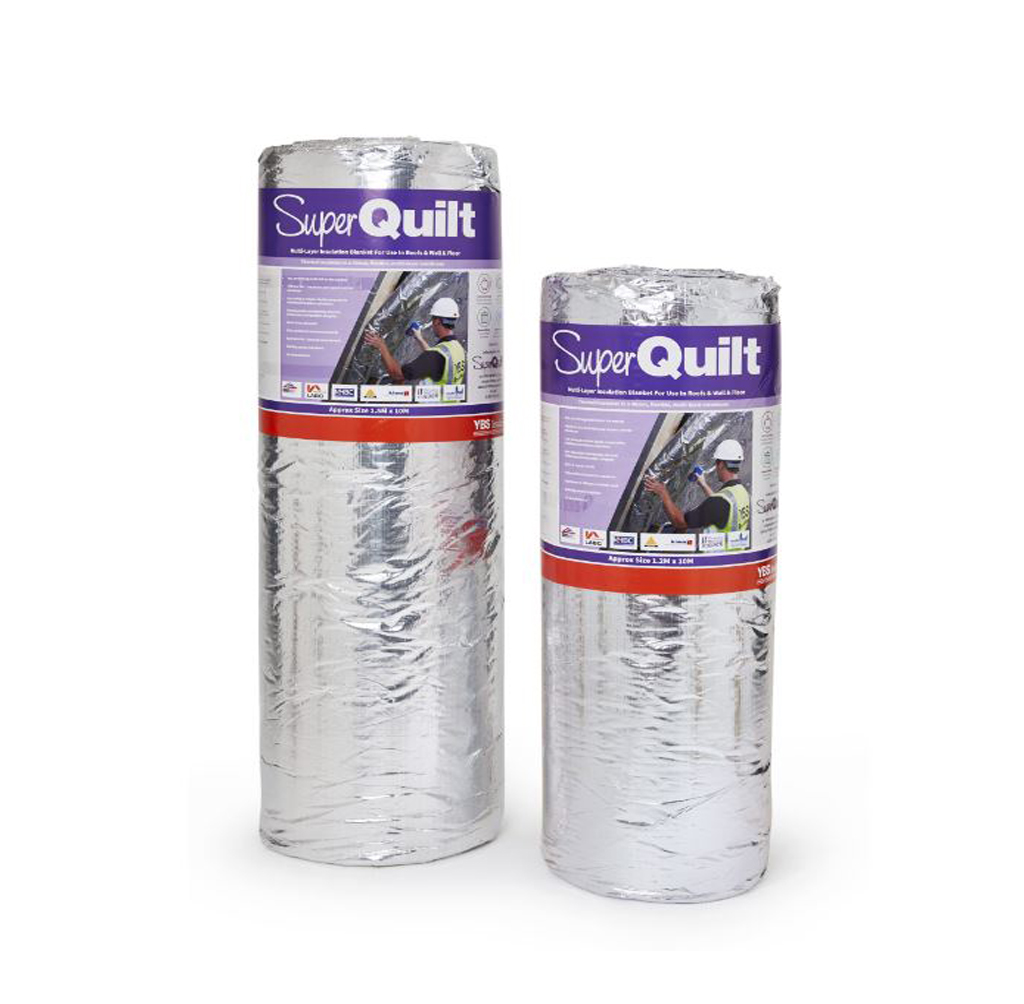
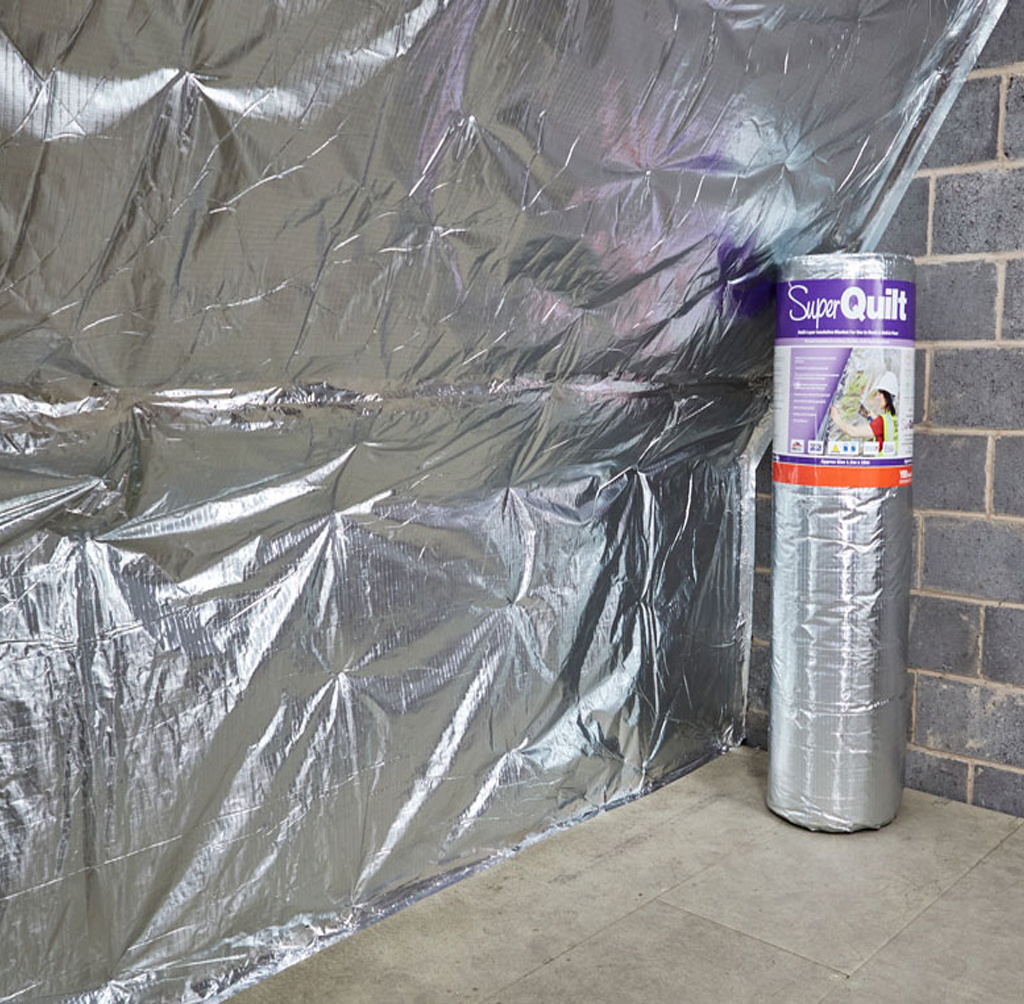
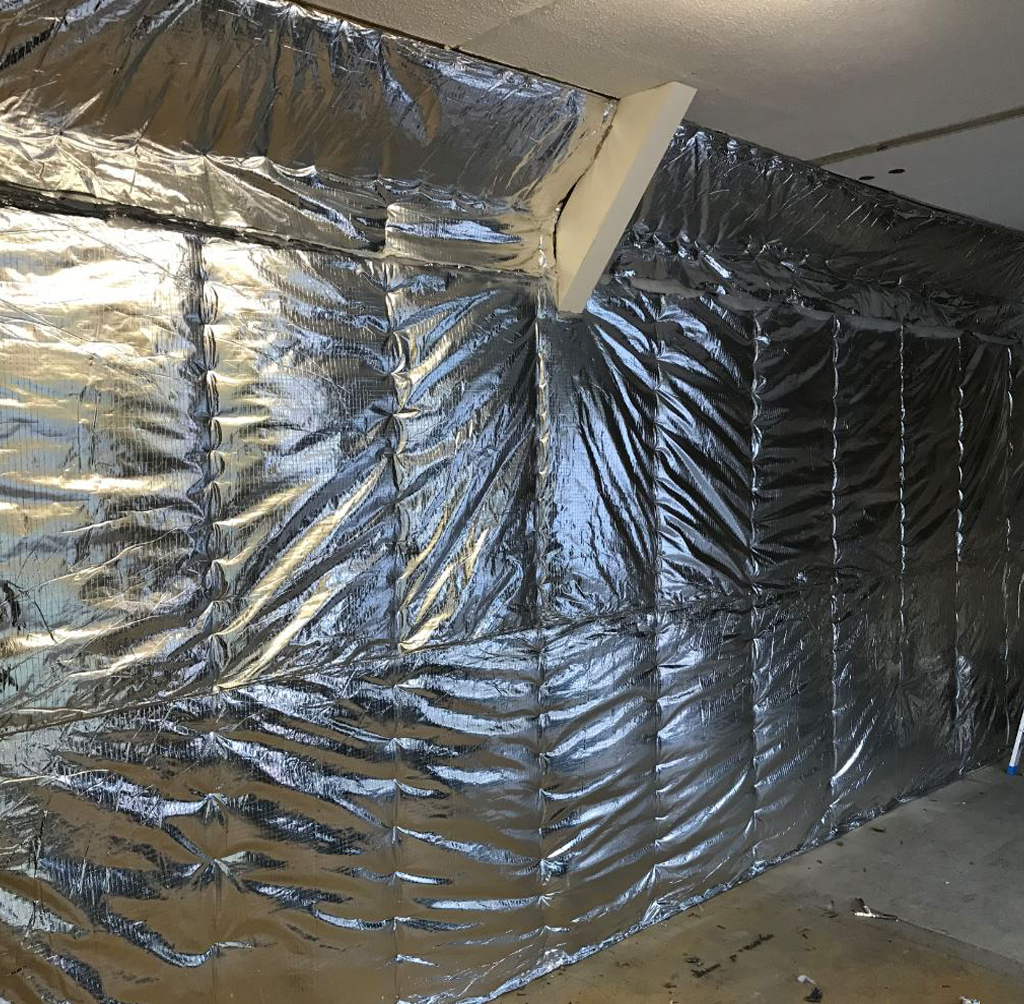
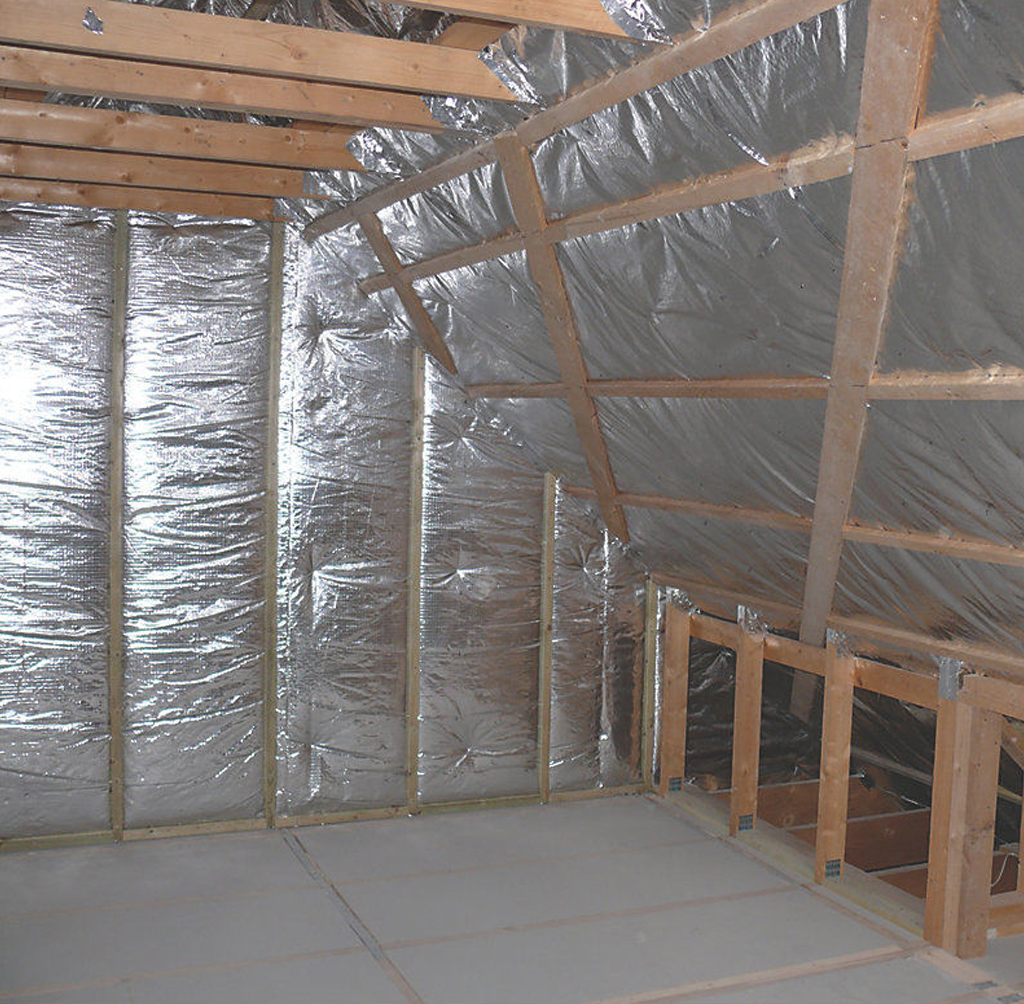
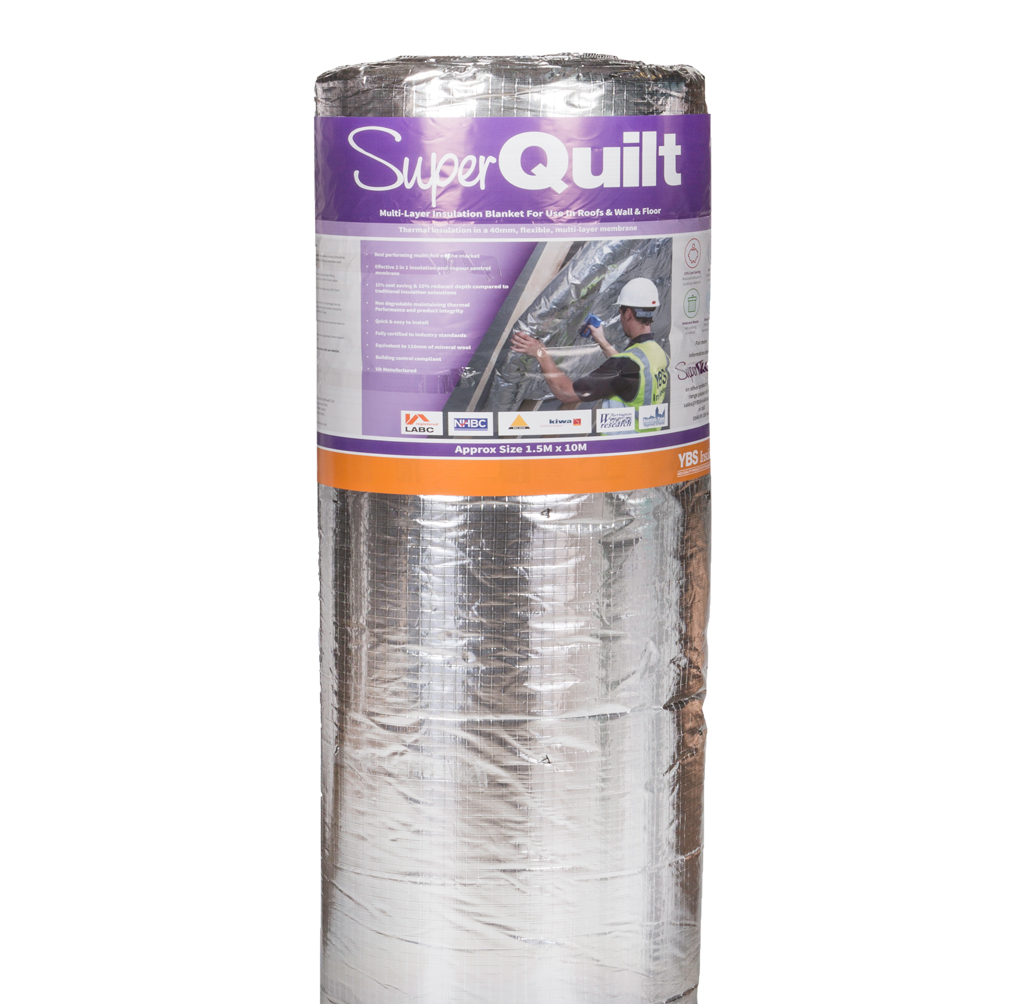
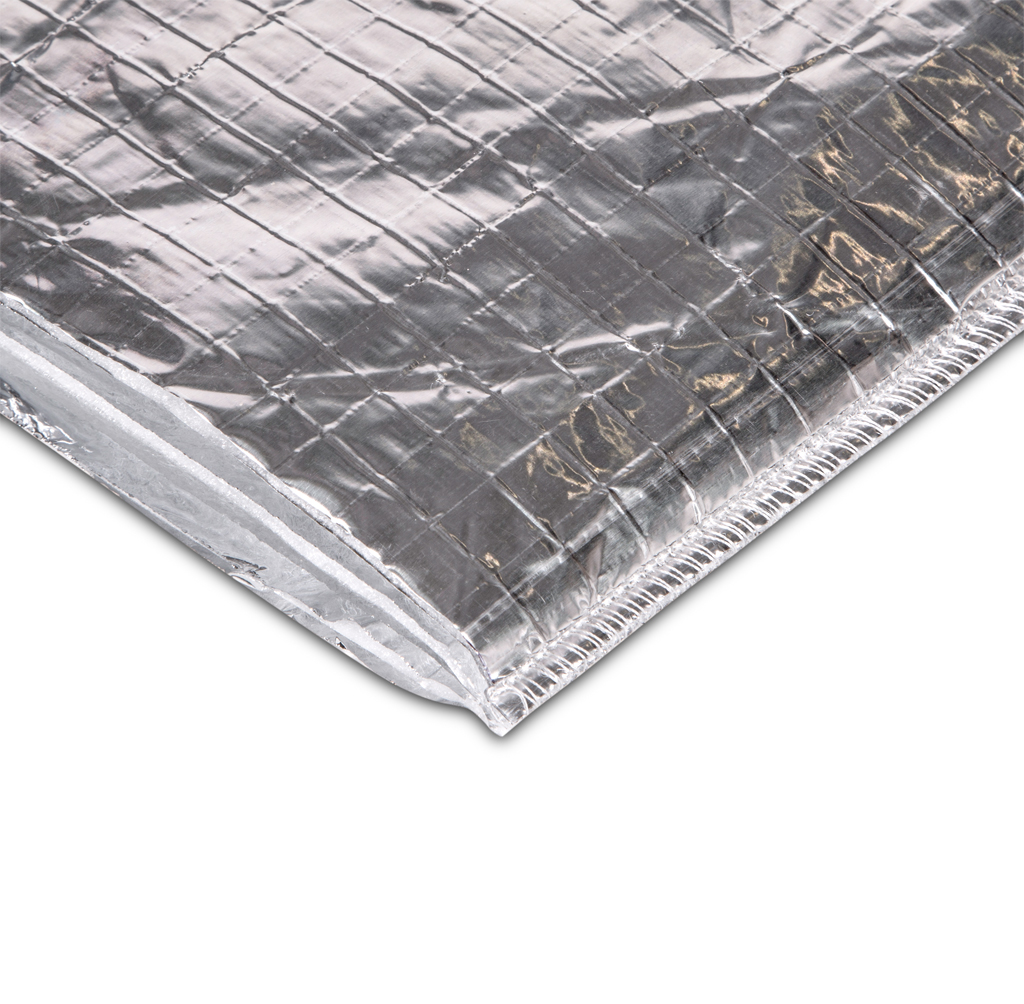
YBS SuperQuilt is the World’s Highest Performing EN certificated Reflective Multifoil Insulation on the market. This product has been designed to Insulate Roofs, Walls, Floors and Conservatories. For each application it takes up less space, time and cost, compared to traditional Rigid Board Insulation materials e.g. Kingspan or Celotex.
We are the Leading Distributor of this product and can Guarantee the Lowest UK Price, when purchasing SuperQuilt direct*
If you are going through building regulations, SuperQuilt is BDA Certificated for Building Control. You can also use SuperQuilt to boost your EPC rating due to it being fully accredited.
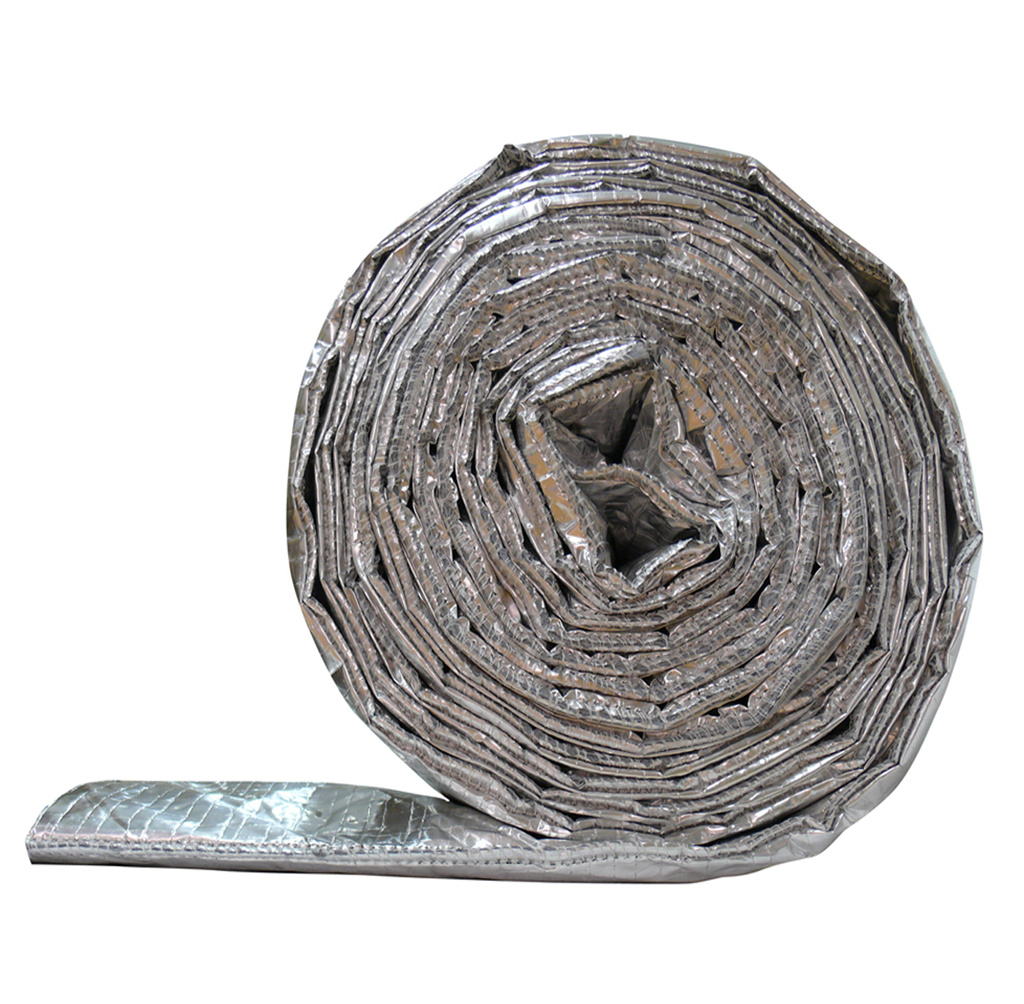
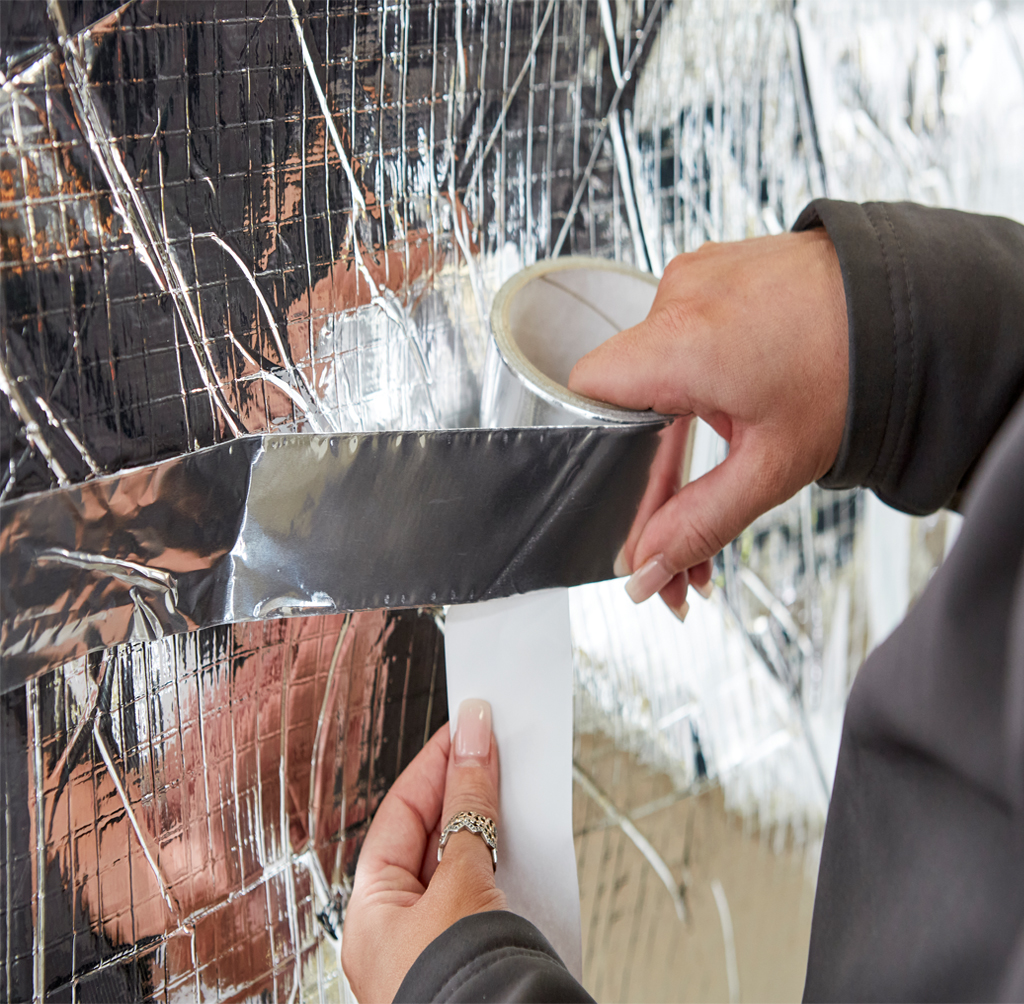
Superquilt is a great product as it compresses down to around 10mm. This means, you can maximise the space. The product consists of 19 layers of True Aluminium and Recycled Wadding and also has a built in Vapour Control Layer (VCL) when fully taped and sealed using our ThermaSeal Foil Joining Tape.
By using SuperQuilt, you can reduce heat loss, improve energy efficiency, and help extend the lifespan of your heating and cooling systems.
Going through building regulations?
See how you can use SuperQuilt Insulation in your next project to meet Building Regulations. You can use our trusted distributors, Multifoil Insulation’s free and instant Online U-Value Calculator which will advise you which products you can use to meet that u value if you would prefer to speak to our Technical Team then you can request a ‘Call Me Back’ and one of our dedicated team members will call you back within the hour.
See below our Downloadable SuperQuilt Data and Fitting Sheets as well as How-To Videos to see how easy it is to install YBS SuperQuilt in your project.
The most cost effective way to order SuperQuilt is to purchase our Trade Pallet Deals which would include ThermaSeal Foil Joining Tape and a Heavy Duty Staple Gun including 5,000 x 14mm Staples.
Next Day Delivery to the UK Mainland on all orders placed before 2pm.
FREE GIFT
Spend £500 + VAT and Choose a FREE GIFT at the checkout!
Free Gifts Include: Thermaseal Foil Joining Tape, Heavy Duty Staple Gun Kit, Multifoil Insulation Scissors or Thermaseal Double Sided Tape.
Please see below all solutions what YBS SuperQuilt is certified for (LABC & BDA), the links will provide further technical information, fixing instructions and typical U-values which can be achieved;
- SuperQuilt Pitched Roof Details – See Link
- SuperQuilt Flat Roof Details – See Link
- SuperQuilt ReRoofing Systems – See Link
- SuperQuilt Timber Frame Wall Systems – See Link
- SuperQuilt Dry Lining Wall Details – See Link
- SuperQuilt External Wall Insulation Details – See Link
- SuperQuilt Suspended Timber Floor Details – See Link
- SuperQuilt Solid/Floating Floor Details – See Link
- SuperQuilt Crawl Space Floor Details – See Link
*If a genuine reseller is offering SuperQuilt Multifoil at a lower rate, we will beat or match their price!
How to Insulate your Loft using a Double Layer of SuperQuilt
How To Insulate Your Walls using SuperQuilt
How to Install SuperQuilt on Timber Floors
How to install SuperQuilt Insulation on a Flat Roof to meet Building Regulations
How to Fit SuperQuilt Under Rafter
-
Installing first run of SuperQuilt
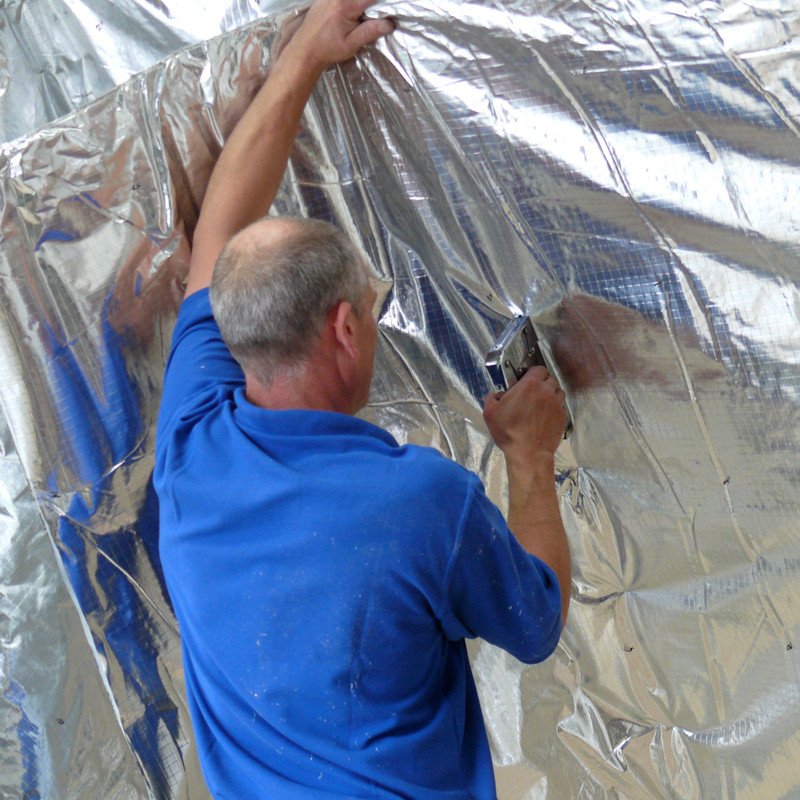
SuperQuilt can be installed either vertically or horizontally, dependent on rafter height. Staple SuperQuilt to the rafters at spacing's of approx 300mm. Ensure SuperQuilt is pulled taught whilst rolling and stapling.
-
Overlaps & Tapes
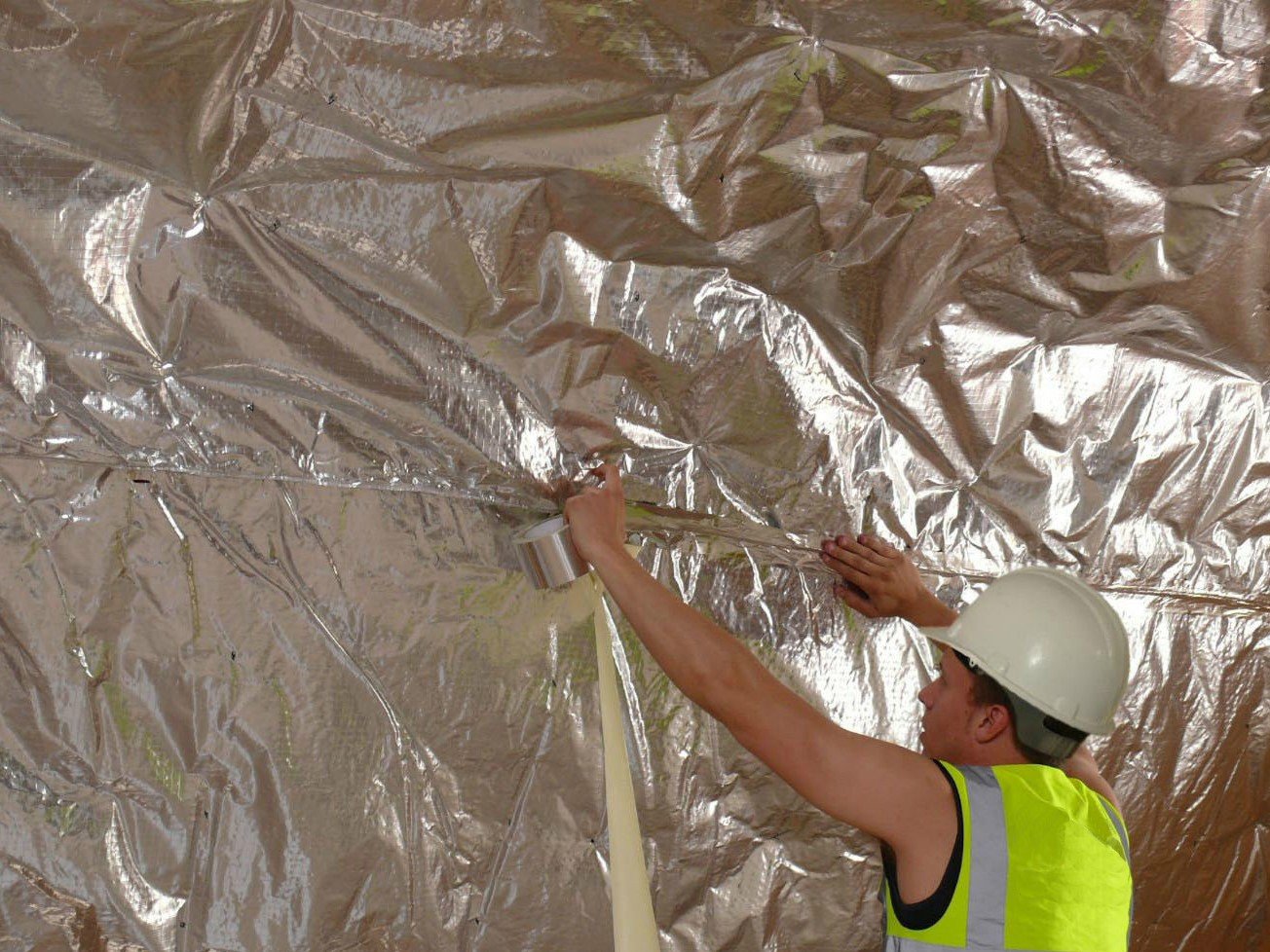
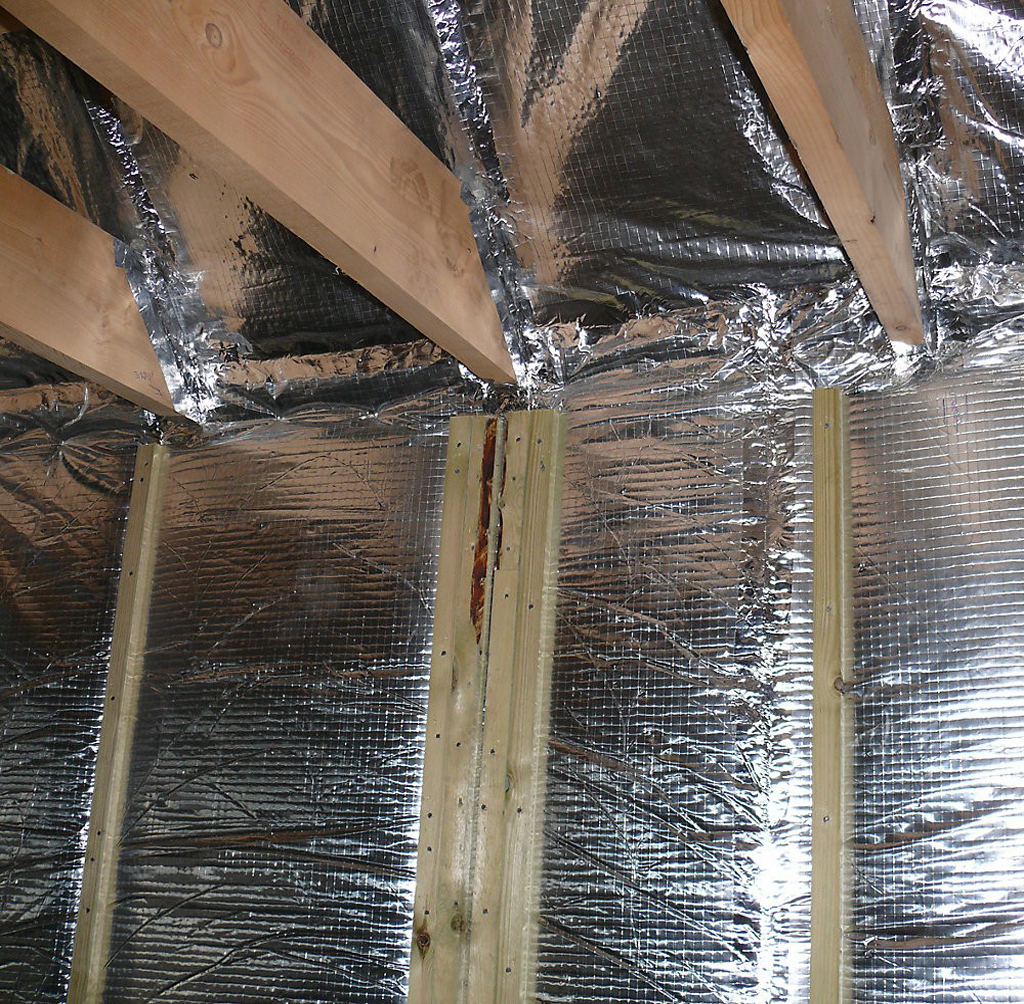
Ensure all SuperQuilt Insulation joints are overlapped by min 50mm. Ensure overlaps are fully taped and sealed using Thermaseal Foil Joining Tape. SuperQuilt can be easily cut using Multifoil Scissors or a Cutting Knife - Both available in our Multifoil Fitting Kit.
-
Eaves Detailing
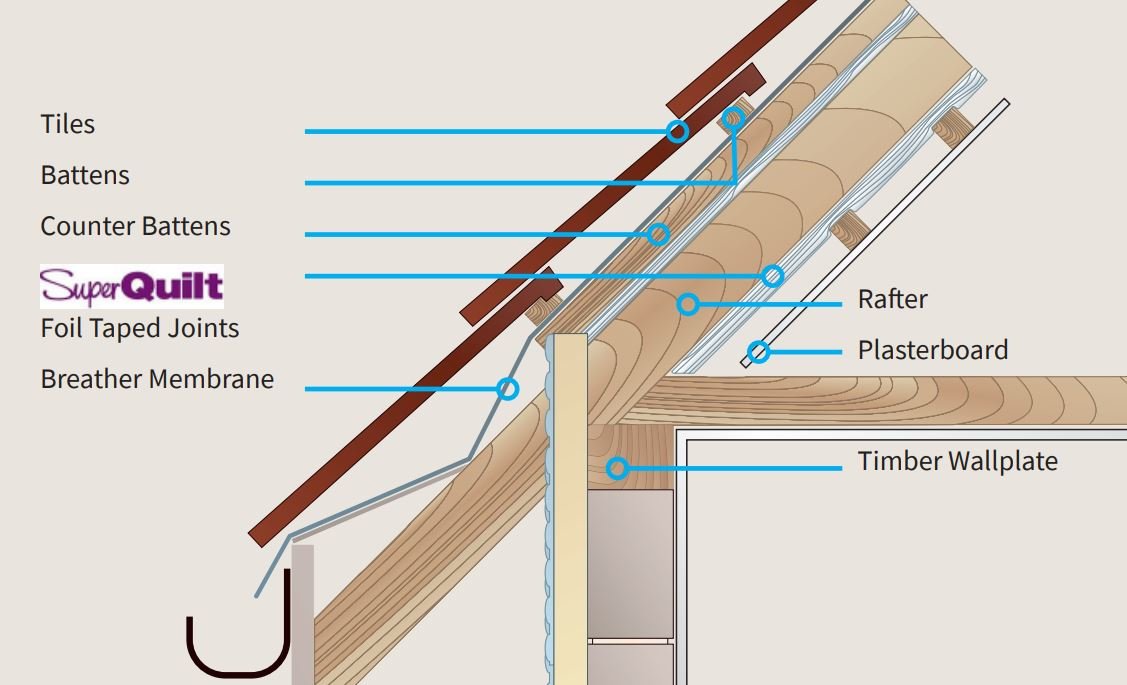
At the eaves, SuperQuilt is cut around the rafters, and sealed to the cavity wall insulation or wall plate. It is vital to ensure fully taped and sealed, to ensure that an airtight envelope is created
-
Counter Batten
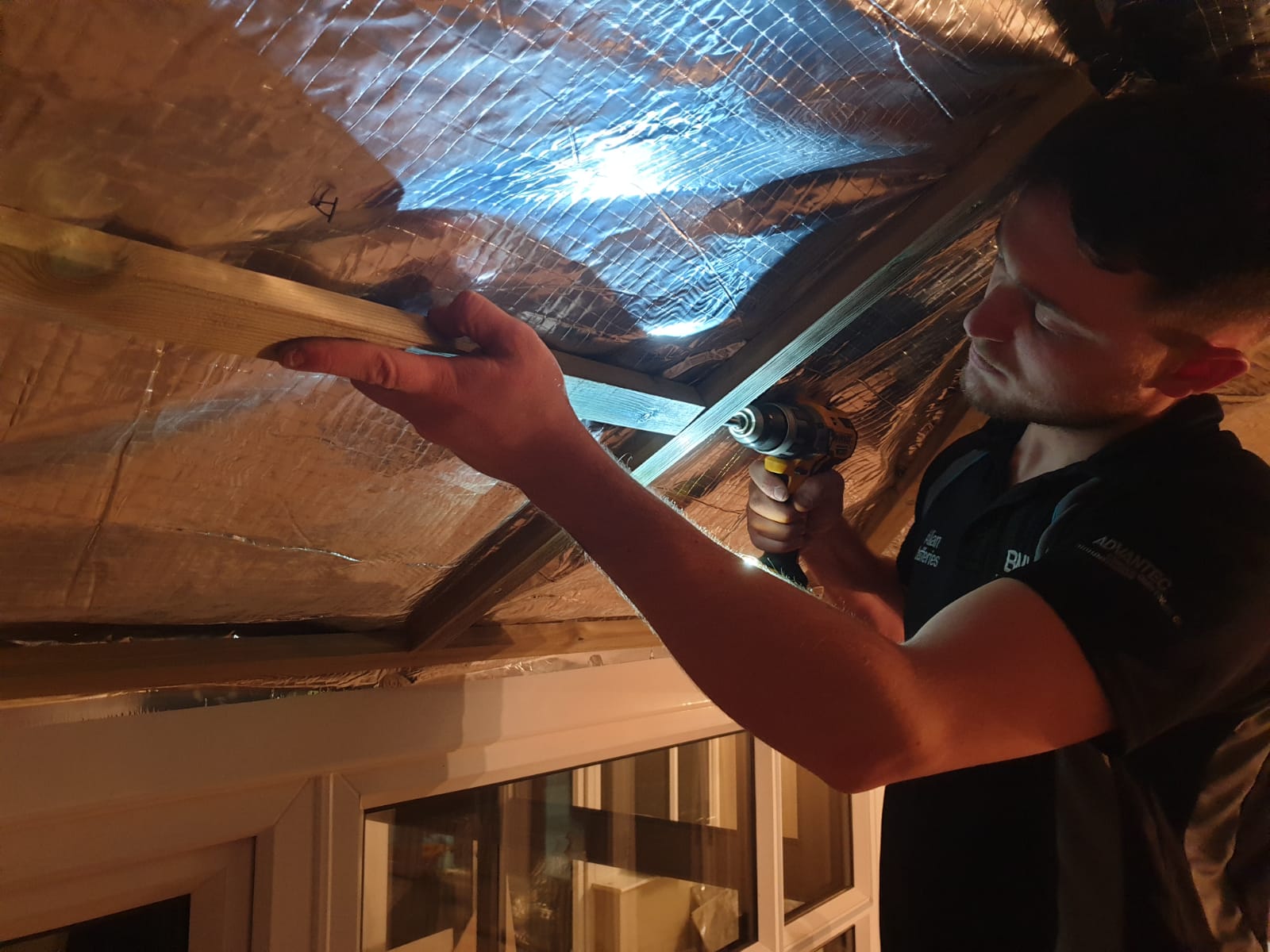
Fix 25mm x 38mm battens at right angles to the rafters. Deeper battens can be used if preferred. Battens also must be fixed around the perimeter of windows.
-
Internal Finish
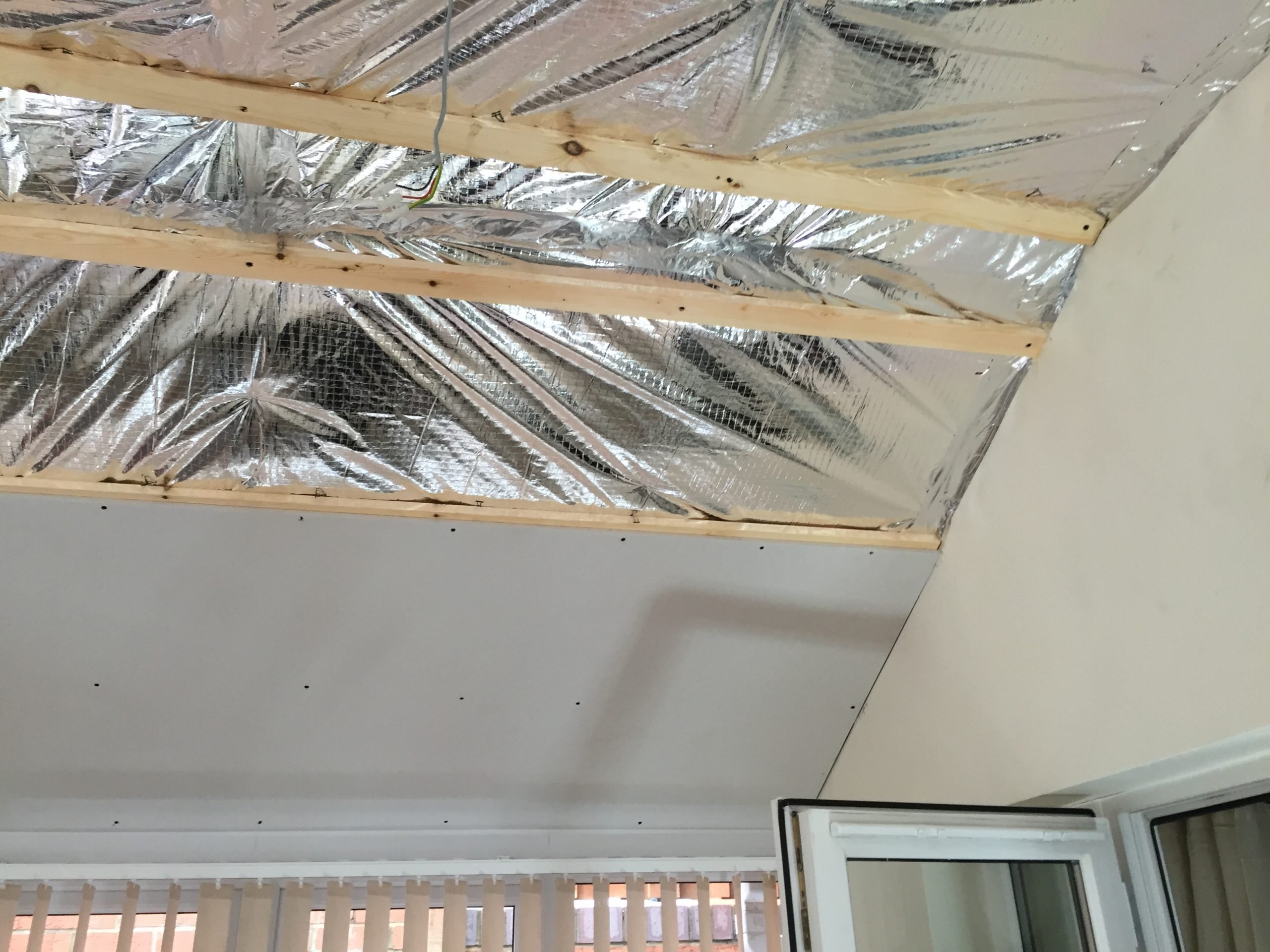
The plasterboard is then screwed into the battens in the usual manner. When SuperQuilt is installed as the most internal insulation layer, there is no requirement for a foiled-back plasterboard. SuperQuilt will work as a high performing Vapour Control Layer, when taped and sealed using Thermaseal Foil Tape.
How to Fit SuperQuilt onto Solid Walls
-
Install Timber Battens
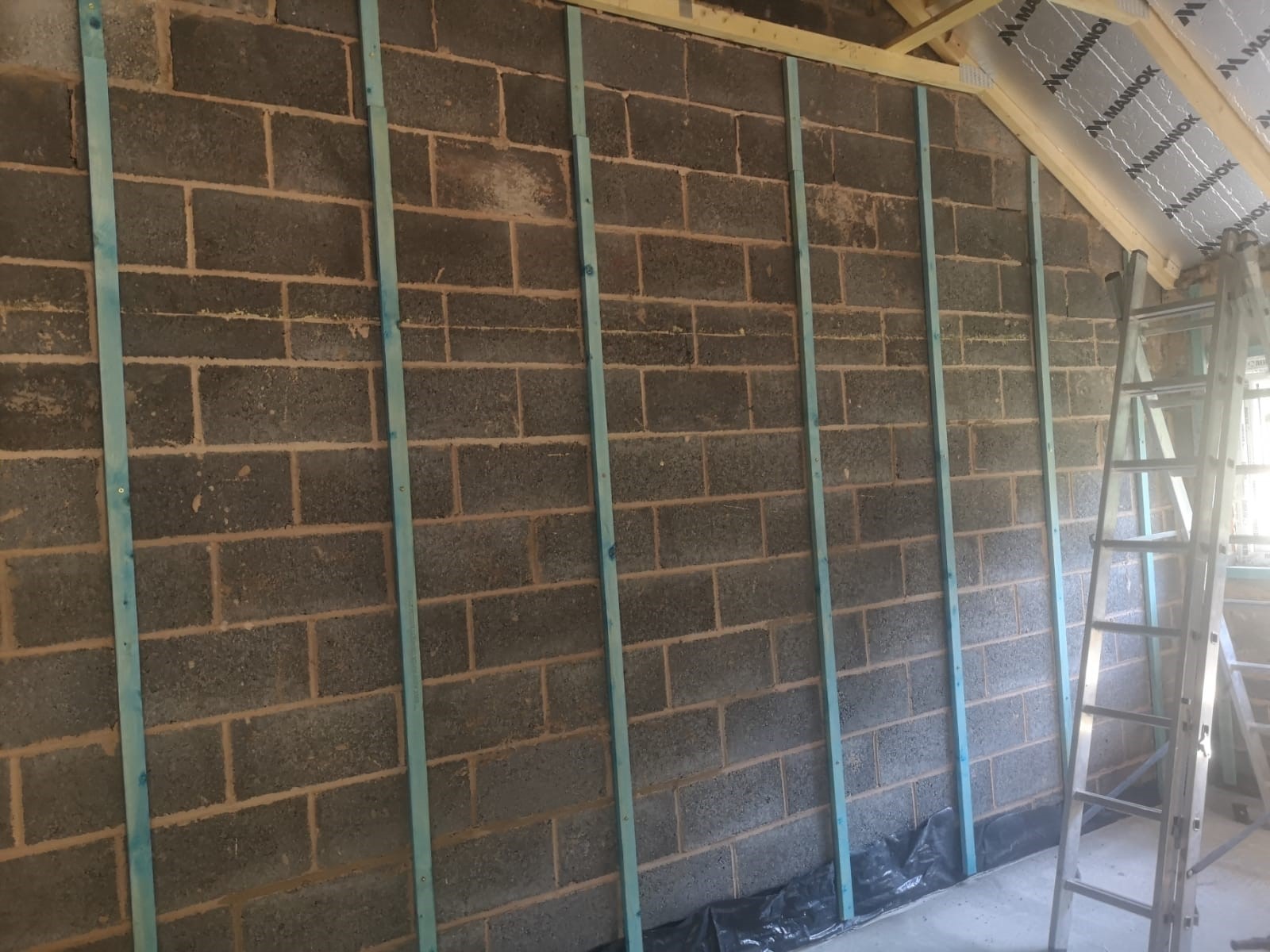
Start by installing treated timber battens directly onto your solid walls. We advise the spacing's to be between 400mm & 600mm centres. Usually the thickness of the battens required are 25mm however this will depend on your desired U-value. To find the recommended batten depth for your project, visit our Free to use Online U-value Calculator.
-
Staple SuperQuilt
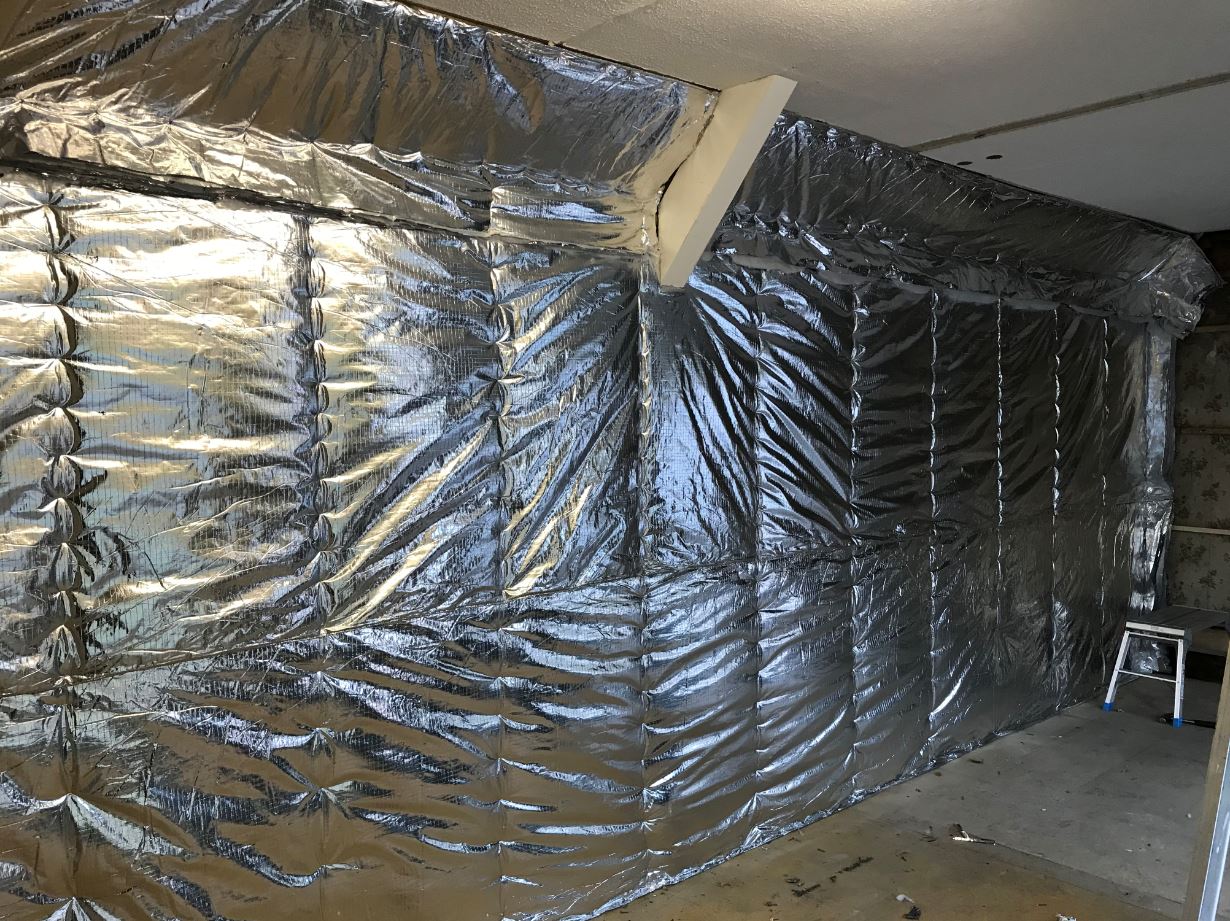
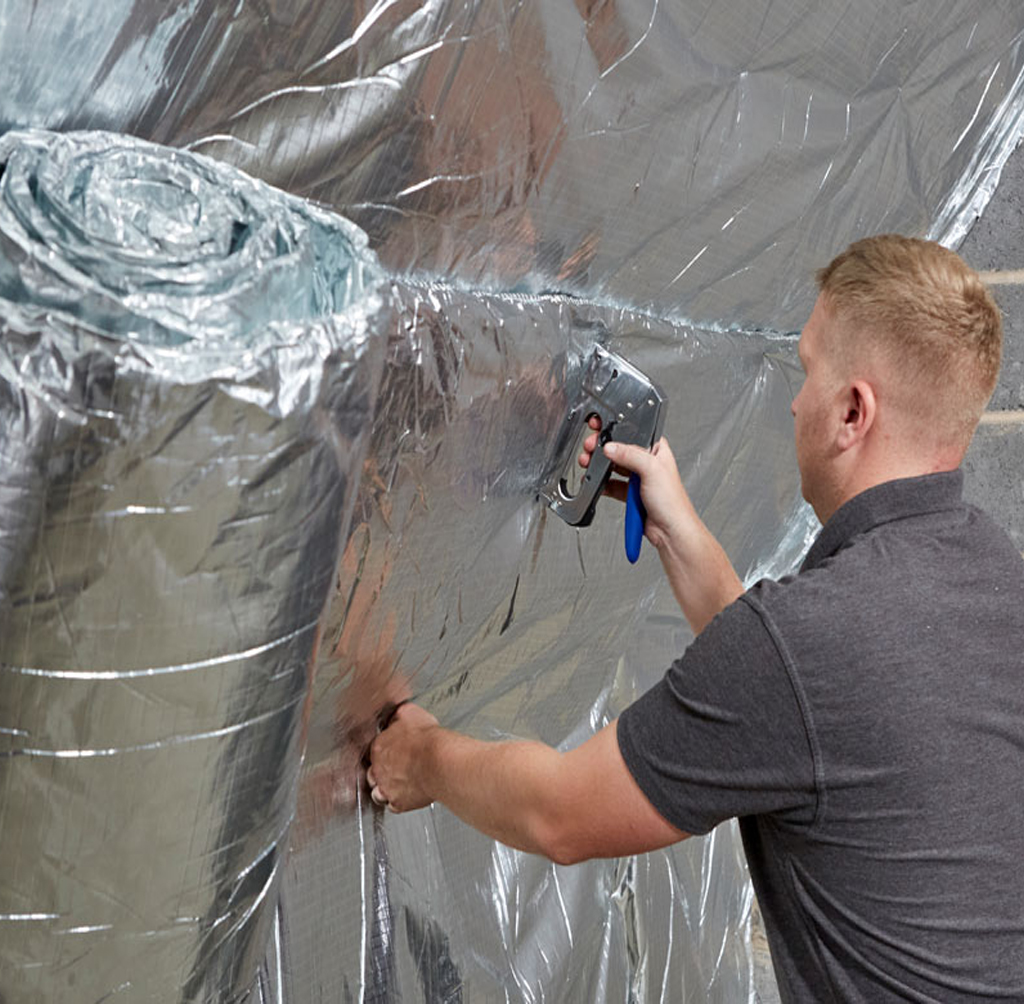
Next, staple SuperQuilt onto the first set of battens, then roll out SuperQuilt horizontally. We recommend the use of 14mm staples when fixing SuperQuilt. Multifoil-Insulation's Fitting Kit includes a Heavy Duty Staple Gun & 5,000 14mm Staples. SuperQuilt can be easily cut using our Multifoil Scissors, available on our website.
-
Overlaps & Sealing
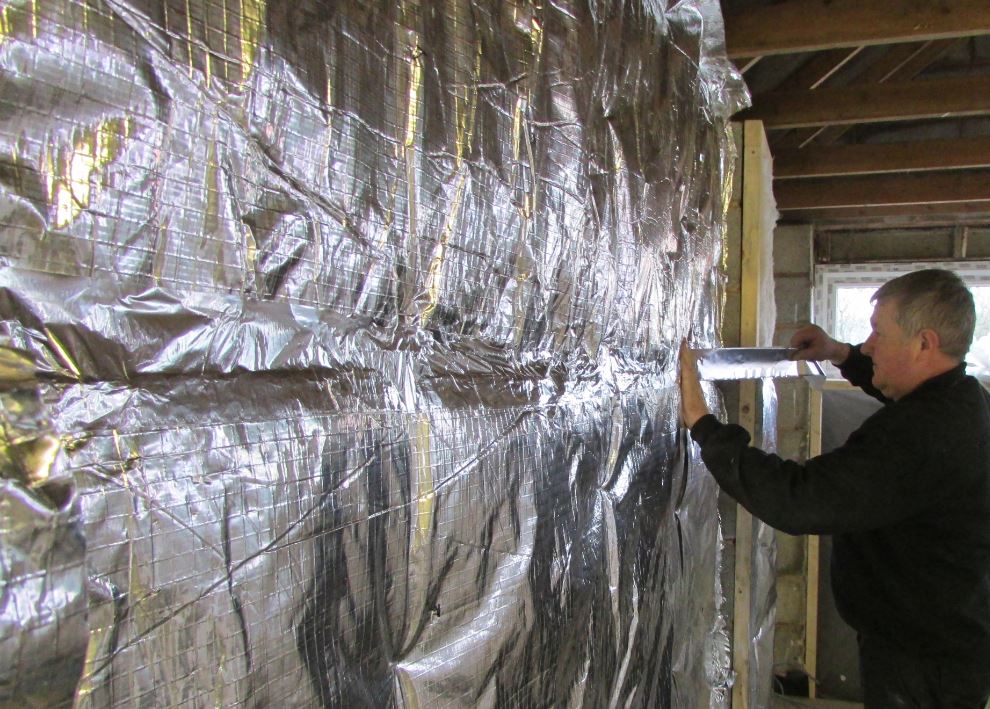
Overlap SuperQuilt by a minimum overlap of 50mm. Tape and Seal SuperQuilt using ThermaSeal Foil Tape. We recommend sealing all overlaps, joints and the perimeter to ensure a complete seal. This will eliminate the risk of condensation.
-
Install Counter Battens
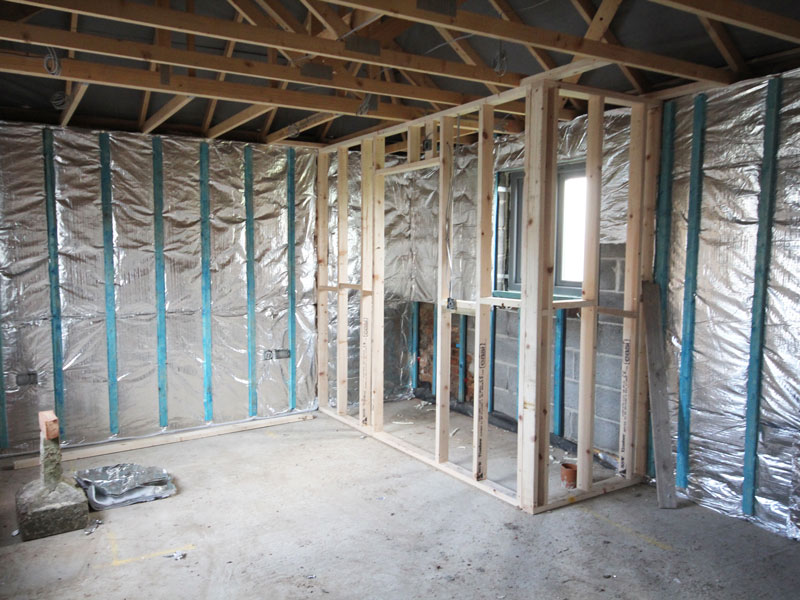
Once SuperQuilt is fully installed and covered, install counter battens over SuperQuilt. We recommend to create a frame around any windows, and around the perimeter. Thickness of batten will depend on desired U-value. To find the recommended batten depth for your project, visit our Free to use Online U-value Calculator.
-
Installing Plasterboard
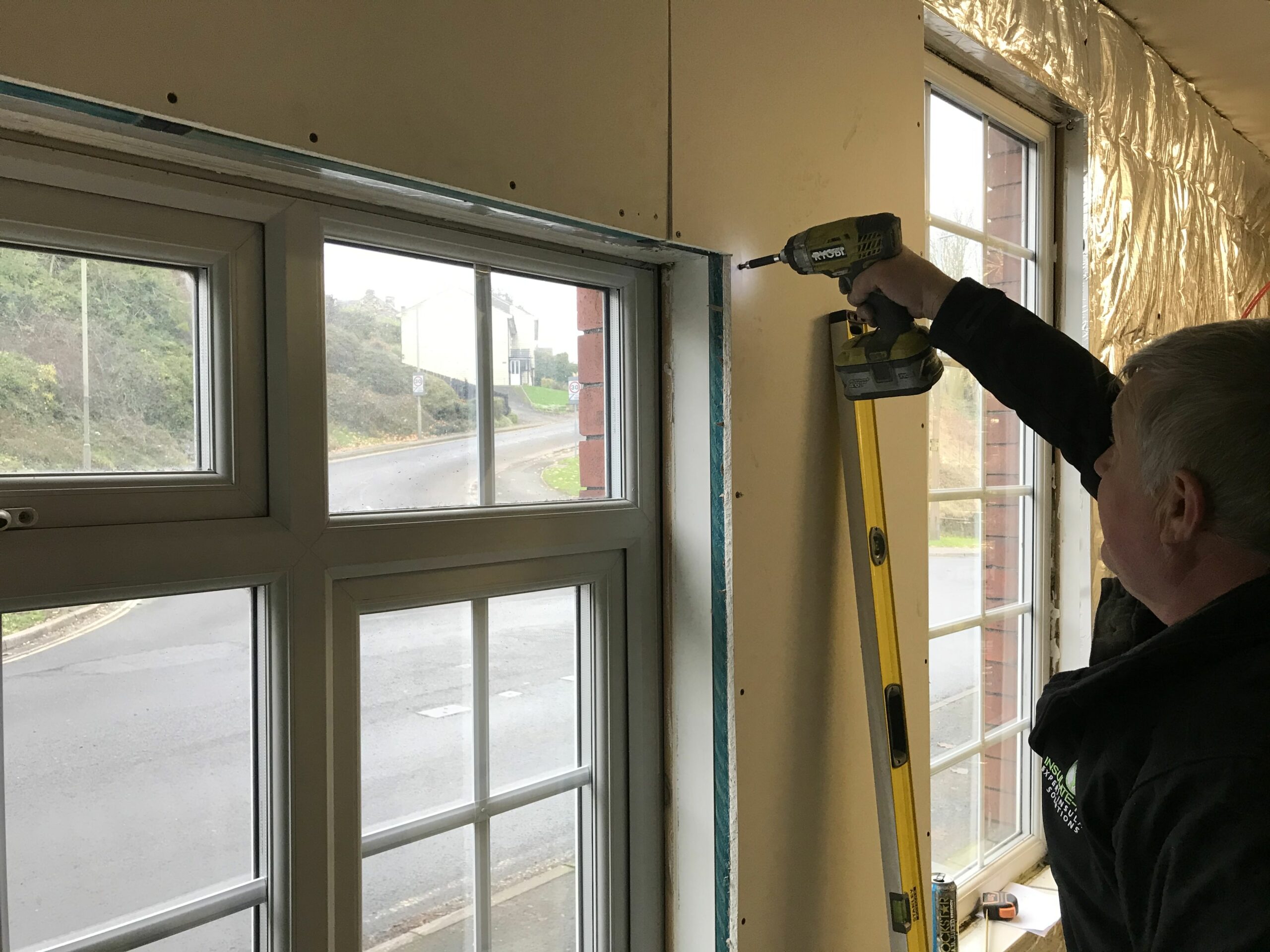
The plasterboard is then screwed into the battens in the usual manner. When SuperQuilt is installed as the most internal insulation layer, there is no requirement for a foiled-back plasterboard. SuperQuilt will work as a high performing Vapour Control Layer, when taped and sealed using Thermaseal Foil Tape. Optional Insulated Plasterboard's can be used for extra thermal benefits and to reach a lower U-Value.
How to Insulate Above a Concrete Floor Using SuperQuilt
-
Installing first run of SuperQuilt
SuperQuilt can be rolled out vertically or horizontally along the concrete floor. Leave enough material at the edges to protrude SuperQuilt Insulation above the floor deck. Ensure the concrete floor is fully clean, flat, and debris free.
-
Joints and Taping
Ensure SuperQuilt is butt jointed with other layers on both the verticals and horizontals. Fully tape and seal all butt joists of SuperQuilt with Thermaseal 75mm Foil Joining Tape.
-
Installing Battens
Timber battens or joists are then laid over the top of SuperQuilt. Ensure the timbers are spaced evenly to suit the particular flooring. SuperQuilt will compress to around 7mm when timber is installed above. We recommend min depth battens of 50mm, using 75 or 100mm joists/battens will give greater thermal benefits.
-
Finish with Flooring
Proceed with installing your timber boarding floor. The deck is then fixed at 200mm centres, with 37mm screws into the joists or battens below
How to Insulate Your Roof Without Any Kingspan or Celotex
-
Install your first layer of BreatherQuilt
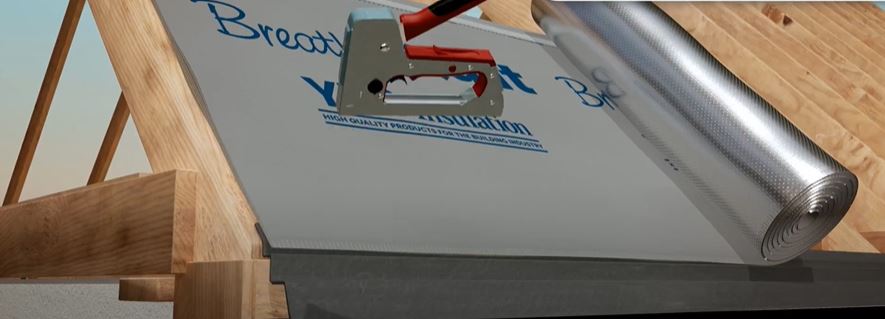
Firstly, install BreatherQuilt Insulation on the external of your pitched roof. The reflective foil will need to be facing inwards. Begin at the bottom of your rafters. Staple BreatherQuilt to the first rafter, using 14mm staples (Max 300mm spacing). Roll BreatherQuilt horizontally across each rafter, stapling continuously to ensure the product is secured. BreatherQuilt should sag between the rafters as opposed to being pulled taught. Ensure that once the tile battens are installed, there is a clear 10mm gap between the top layer of BreatherQuilt and the tile battens.
-
Install next run(s) of BreatherQuilt
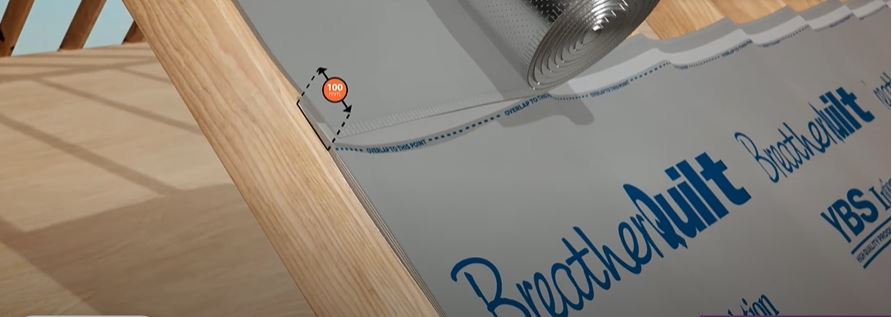
Install the next layers of breatherquilt, ensure that you overlap the product by 100mm. Use the Double Sided Tape that is already on the breatherquilt to secure the two runs and then staple as you did before. Repeat this process as many times as needed, dependent on how many runs are required for the roof. Additional rolls on the verticals should be butt jointed on the rafters. Ensure the butt jointed rolls are stapled as previous and taped using waterproof tape.
-
Install Tile Battens & Tiles
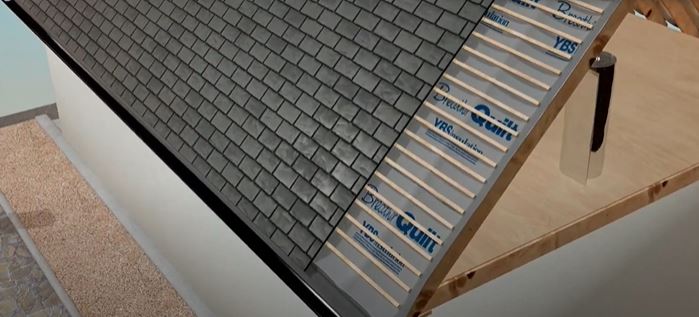
At the eaves, BreatherQuilt should extend onto a suitable eaves carrier. This works in the same method as standard breather membranes. Proceed next by installing horizontal tile battens, on the top of the BreatherQuilt. Finally, finish by install tiles or slates.
-
Install the first layer of SuperQuilt
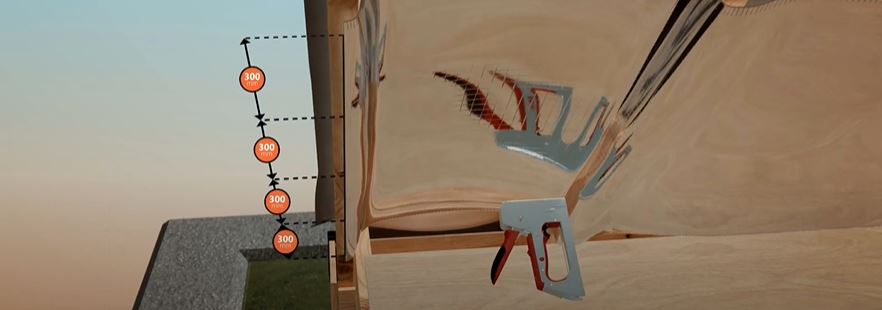
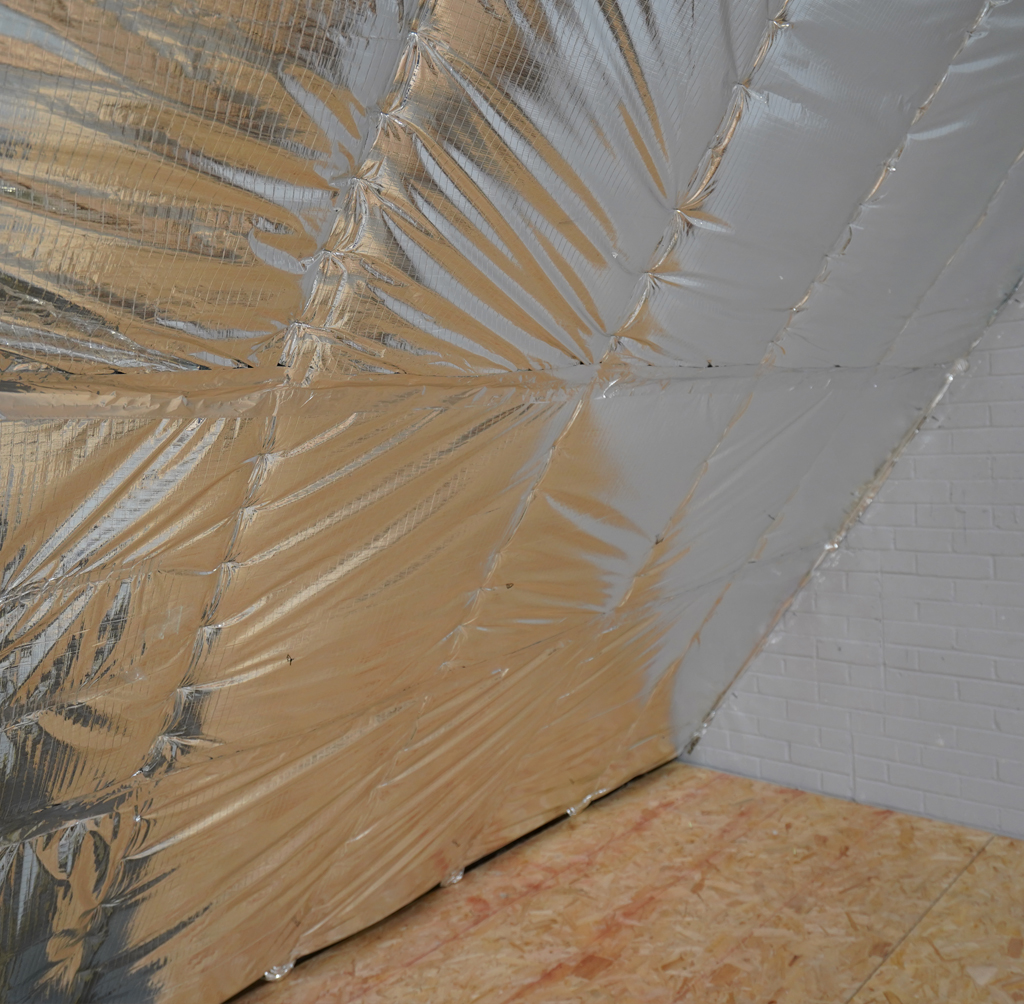
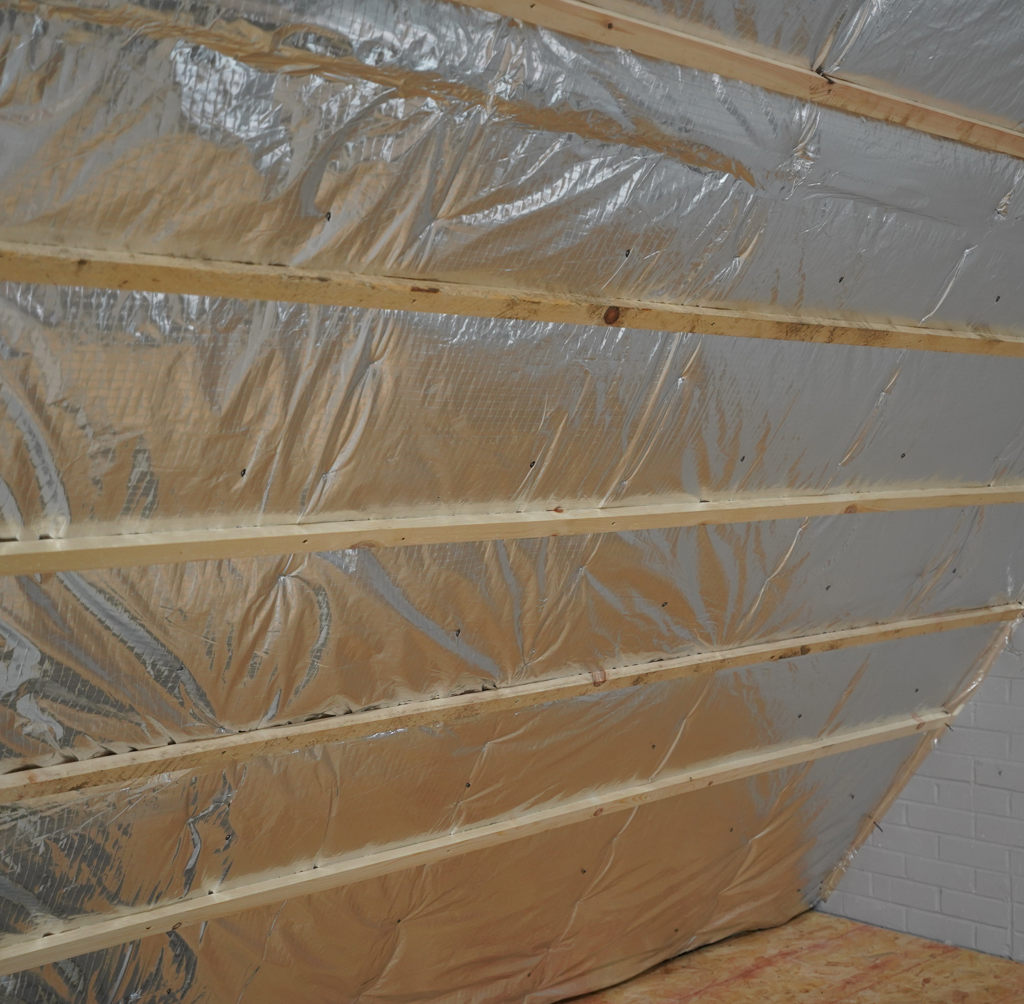
The two layers of SuperQuilt should now be installed on the internal. By internal we are referring to the underside of the roof rafters. The first layer of SuperQuilt is to be recessed in-between the rafters (as per image) Recess by 25mm) and fixed with staples on to the battens. The material is then pulled taught and fixed to the opposite rafter. Tape and seal the first layer, over the laps and around the perimeter.
-
Install the second layer of SuperQuilt
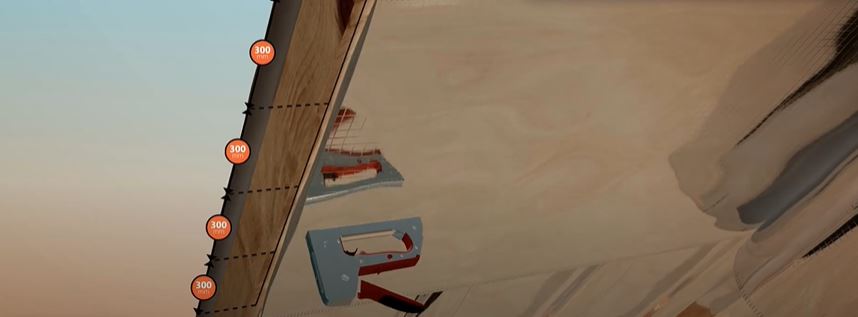
Once the first has been installed then you can now install the 2nd SuperQuilt layer. Staple or nail the second layer through the first layer into the rafters behind. Ensure this layer is also pulled taught, there will then be a cavity between the two layers of SuperQuilt. As per the first layer, the second layer is also overlapped by 50mm. Ensure again the product is fully taped and sealed using Thermaseal Foil Joining Tape.
-
Apply a layer of Timber Battens
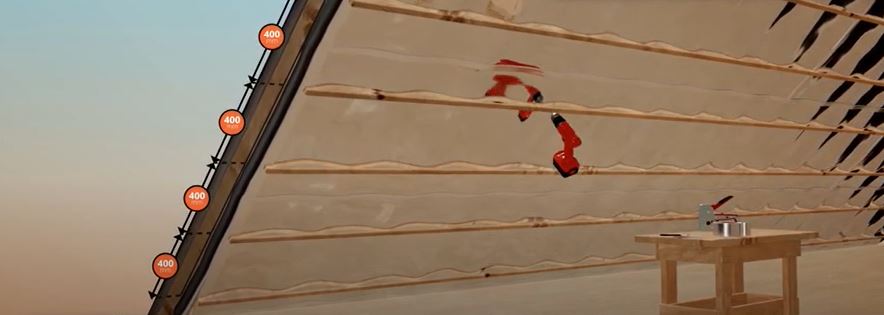
Apply a layer of timber battens, leaving at least 400mm between each one. The battens should be 25mm in depth min, to enable the Superquilt to reflect and perform.
-
Internal Finishing
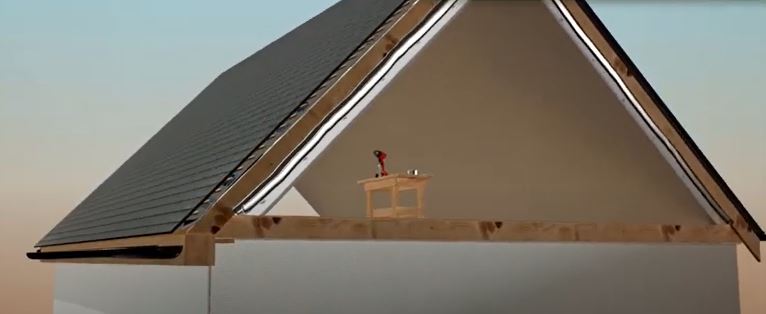
Once both layers are installed and taped, you are ready for your batten & plasterboard. Start by installing min 25mm battens on the insulation. We advise to cross-batten, however vertical battens can be used. Finish by installing 12.5mm Plasterboard. There is no requirement for a Foiled-back plasterboard or VCL. SuperQuilt works as a high performance Vapour Control Layer when taped and sealed.
| Thickness | 40mm |
| Layers | 19 |
| Weight | 800g per m² |
| Core R-value | 1.52m²K/W |
| Roof R-value | 2.50m²K/W |
| Wall R-value | 3.00m²K/W |
| Floor R-value | up to 5.56m²K/W |
| Foil Emissivity | 0.02 |
| Water Vapour Resistance | 1569MNs/g |
Does YBS SuperQuilt meet UK building regulations?
Yes, YBS SuperQuilt is fully certified and tested within the UK to industry standards. SuperQuilt holds a BDA agremoent accreditation, and when installed correctly can be used to help meet building regulations, with many solutions available to achieved required U-values for roofs, lofts, walls, floors. SuperQuilt can be used to achieve common U-values such as 0.18 in walls, and 0.15 in pitched and flat roofs.
Is SuperQuilt better than PIR boards or mineral wool?
SuperQuilt provides a thinner and more flexible alternative to traditional insulation materials such as PIR boards or Mineral Wool, making it ideal where space is limited. It functions as a 3 in 1 solution by combining insulation, a reflective barrier, and a vapour control layer within a single product. This helps improve thermal performance while simplifying installation. By reducing the need for multiple layers, SuperQuilt can save time, labour, and internal space on site. In some applications, it can also be used alongside PIR insulation to help achieve higher levels of thermal efficiency and meet specific project requirements.
How thick is YBS SuperQuilt and how much space does it save?
SuperQuilt has a relaxed thickness of approximately 40mm and compresses significantly to 7mm once installed, making it a practical solution for projects where space is at a premium. Unlike bulky traditional insulation materials, it allows you to maximise usable internal space without compromising on thermal performance. Its flexible and lightweight structure also makes it easier to handle and install on site. This combination of compact design and high efficiency makes SuperQuilt a great choice for both new builds and renovation projects where saving space whilst not sacrising quality are key priorities.
Can I install SuperQuilt myself or do I need a professional?
SuperQuilt is designed for easy installation, making it suitable for both DIY users and professionals. Its flexible and lightweight design allows it to be handled with ease and installed quickly on site. The material can be cut using standard tools such as Multifoil Scissors and fixed in place with a staple gun and staples, reducing the need for specialist equipment. For the best results and maximum thermal performance, it is recommended to follow the product data sheet and installation guides, including how to videos, to ensure correct fitting and optimal efficiency.
Will SuperQuilt help reduce condensation and energy bills?
When SuperQuilt is properly installed and sealed using Thermaseal Foil Tape, it acts as a high performance vapour control layer. Its multiple layers of reflective foil, insulating wadding, and PE foams are engineered to enhance thermal efficiency and reduce heat loss within a building. This advanced construction helps retain warmth during colder months while supporting a more consistent internal temperature. As a result, SuperQuilt can contribute to improved energy efficiency and may help reduce heating costs over time, making it a practical and effective insulation solution for a wide range of applications.
Is SuperQuilt harmful?
SuperQuilt contains no harmful fibres and does not release any toxic gasses when cut or installed. When installing SuperQuilt, there is no requirement for any masks, PPE or gloves.
Do SuperQuilt require airgaps?
To gain the best thermal performance, we recommend a minimum cavity/batten of 25mm both sides of the insulation. This is to allow the product to expand and reflect. If a cavity is removed, the performance would reduce by approx 20%.
What’s the difference between SuperQuilt and SuperFoil?
SuperQuilt is a premium product with true aluminium foils as the outer layers, compared to SuperFoil’s range which has metalized foils which provides a lower Fire Classification Grade (Fail) SuperQuilt is also fully certified, and UK manufactured compared to SuperFoil.

Charlie B –
Use SuperQuilt in all my loft conversions projects. Helpful staff and reliable deliveries
Steve M –
Excellent product and a great space saver. Used Superquilt to insulate the walls and ceiling in my loft conversion. Very easy to cut and install as it’s incredibly lightweight and flexible.
Julie B –
Excellent insulation. Easy to install & good price too
Christine R –
Excellent.. Very easy to fit.. I can feel the benefit immediately.
Michelle M. (verified owner) –
speedy delivery, with helpful and prompt responses to our queries
David Harris (verified owner) –
Michael Smith (verified owner) –
daniel everson (verified owner) –
good stuff really made a difference